
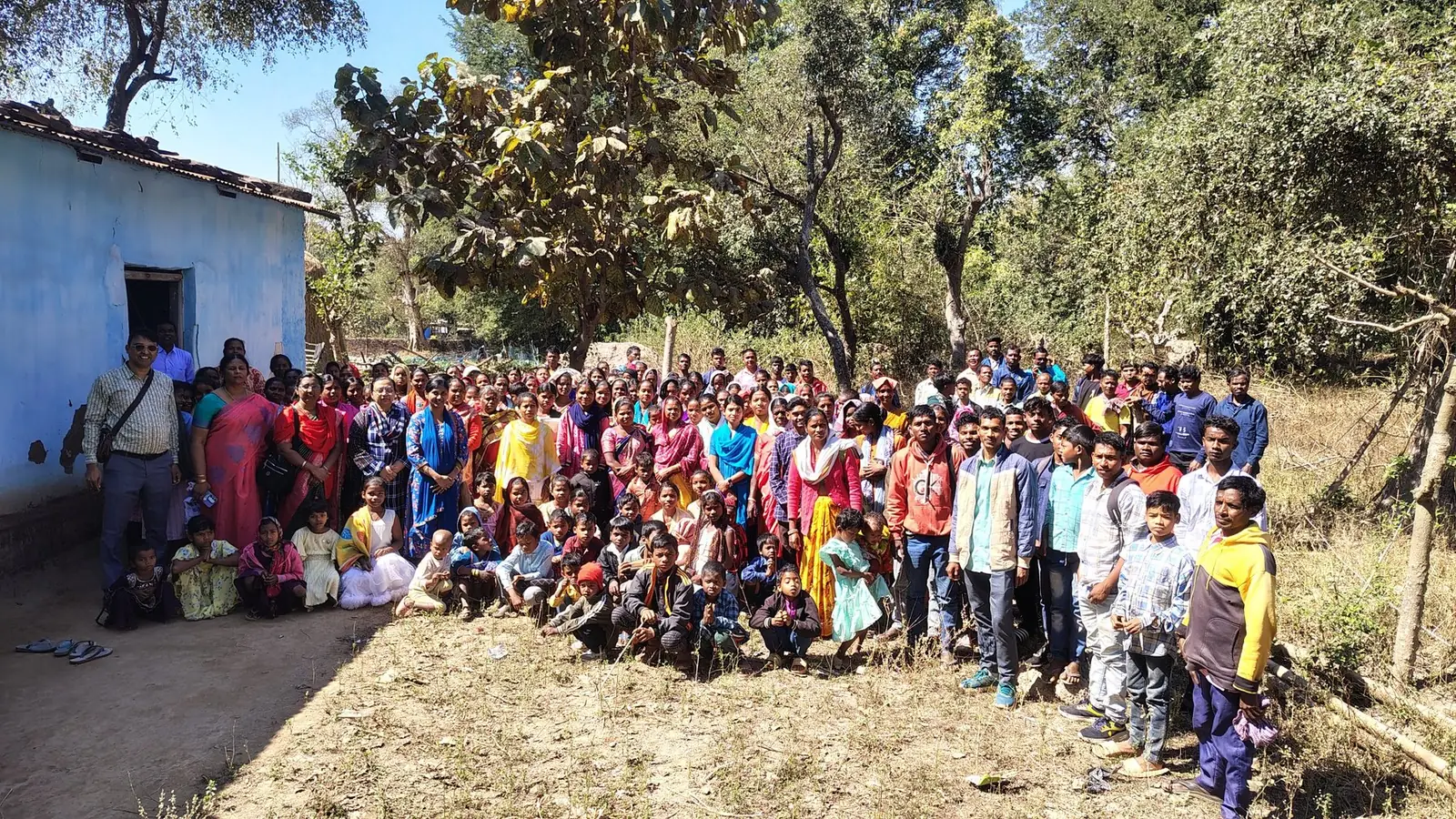
The church in Acts did not grow through institutions. It grew through people. Ordinary believers prayed, shared what they had found, gathered in homes, and planted communities that planted more. In Ephesus, Paul held daily discussions in the lecture hall of Tyrannus, and Luke reports, “This continued for two years, so that everyone who lived in the province of Asia, Jews and Greeks alike, heard the word of the Lord” (Acts 19:10). Paul did not visit every town in the province himself. The message traveled with the people who heard it.
The same patterns appear in movements around the world today. People call them church-planting movements or disciple-making movements, and they are what we pray for and work toward in India. Here is what disciple-making movements are, what they have in common, and why they fit a country as large and varied as India.
What a disciple-making movement is
David Garrison documented these patterns in movements around the world in his book Church Planting Movements. His short definition reads: “A Church Planting Movement is a rapid multiplication of indigenous churches planting churches that sweeps through a people group or population segment.”
Each part of that definition matters. The growth is rapid, and it multiplies instead of adding: new churches start other new churches, instead of each church simply getting bigger. It is indigenous, which Garrison explains as “generated from within, as opposed to started by outsiders.” Outsiders may start the first churches, but the momentum soon passes to local believers. It is churches planting churches, not a handful of professional church planters doing all the work. And it moves through a people group or population segment, where people share a language and an identity and the gospel can travel along relationships that already exist.
Many people use the name disciple-making movement, or DMM, for the same kind of growth. The two names put the weight in different places. “Church-planting movement” names the result, a multiplying network of churches. “Disciple-making movement” names the process that leads there: disciples who make disciples, who gather into churches that do the same.
Garrison is careful to describe these movements, not prescribe them. Taking that approach, he writes, is a way of “humbly admitting that the work is not ours; it belongs to God.” No method can manufacture a movement. What believers can do is pray, obey, and share what they have received. Jesus told a parable about a man who scatters seed on the ground, and “the seed sprouts and grows, though he knows not how” (Mark 4:27).
Six patterns we build on
Garrison’s research describes patterns that show up again and again in these movements. We build our church-planting work on six of them.
- Prayer First. Movements begin with people who bring their streets, their families, and their city before God, consistently.
- Abundant Sharing. Ordinary people share what they have found with neighbors, friends, and strangers, and the good news spreads further than any campaign could plan.
- Scripture as Anchor. Groups gather around God’s Word, read it together, and ask what it says, what it means, and what they will do.
- Simple Churches. Small, reproducible gatherings that anyone can host and anyone can lead. A church is people committed to God and to one another, not a building.
- Local Leaders. Local believers step up, shepherd people they know, and lead through challenges they understand firsthand.
- Churches Plant Churches. Every believer, not just pastors and ordained leaders, gathers others, disciples them, and releases them to do the same.
Our church-planting page explains each principle, along with the five-step method we use.
Why movements fit India
India is vast and varied. Joshua Project, which tracks the world’s people groups, counts 2,263 people groups in India and lists 2,033 of them as unreached. No outside ministry could reach that many communities one at a time. If the gospel is going to reach them, most of the carrying will be done by believers from inside or near each community, who speak the language, know the customs, and are already trusted.
That is exactly what a disciple-making movement depends on. Movements don’t wait for outsiders to arrive. Local believers step up and lead people they already know.
In the New Testament, the gospel often moved along family and friendship ties. When Peter came to Caesarea, Cornelius “had called together his relatives and close friends” (Acts 10:24). In Philippi, Paul and Silas “spoke the word of the Lord to him and to everyone in his house” (Acts 16:32). The Greek word for household, oikos, gives its name to the framework we use to help believers identify and pray for their closest circle, because a believer’s mission field starts there.
Language matters too. People understand Scripture best in the language they use every day, and believers learn to teach others best the same way. Our training is offered in Tamil, Hindi, English, and Bengali.
What it looks like, step by step
Movements don’t follow a script, but they tend to grow through the same kinds of steps. Our five-step method names them: identifying God-prepared people, reproducing evangelism, reproducing disciples, reproducing churches, and reproducing leaders.
In practice, it might look like this. A believer prays for the people in their household and neighborhood and watches for someone God has prepared, someone open and curious. That person invites family and friends to read the Bible together at home, often as a Discovery Bible Study. The group reads, obeys, and shares what it learns. As people come to faith and are baptized, the group becomes a simple church. Someone in that church starts another group with their own relatives or coworkers. The leaders who emerge are mentored the way Paul walked with Timothy, until they can mentor others.
Each step is meant to reproduce. One believer becomes several, one group becomes several, and one leader trains several more. That is the difference between addition and multiplication.
What a movement is not
A disciple-making movement is not a program that a ministry runs, and it is not a race to count converts. Our focus is making disciples, not Christianization or adding church members. The goal is a disciple who obeys Jesus and teaches someone else to do the same.
It is also not something outsiders can control. Garrison observes that many near-movements fall short at the point where churches begin planting churches, “as church planters struggle to control the reproducing churches.” That is why we put so much weight on training and mentoring local leaders, and on handing responsibility to them early.
And it is never a shortcut around Scripture or prayer. Movements that last are anchored in God’s Word and carried by prayer. Luke sums up the early church’s growth simply: “the word of God continued to spread and multiply” (Acts 12:24).
Would you pray with us for local believers across India as they make disciples who make disciples? Pray for healthy fellowships to multiply in unreached villages and communities.