
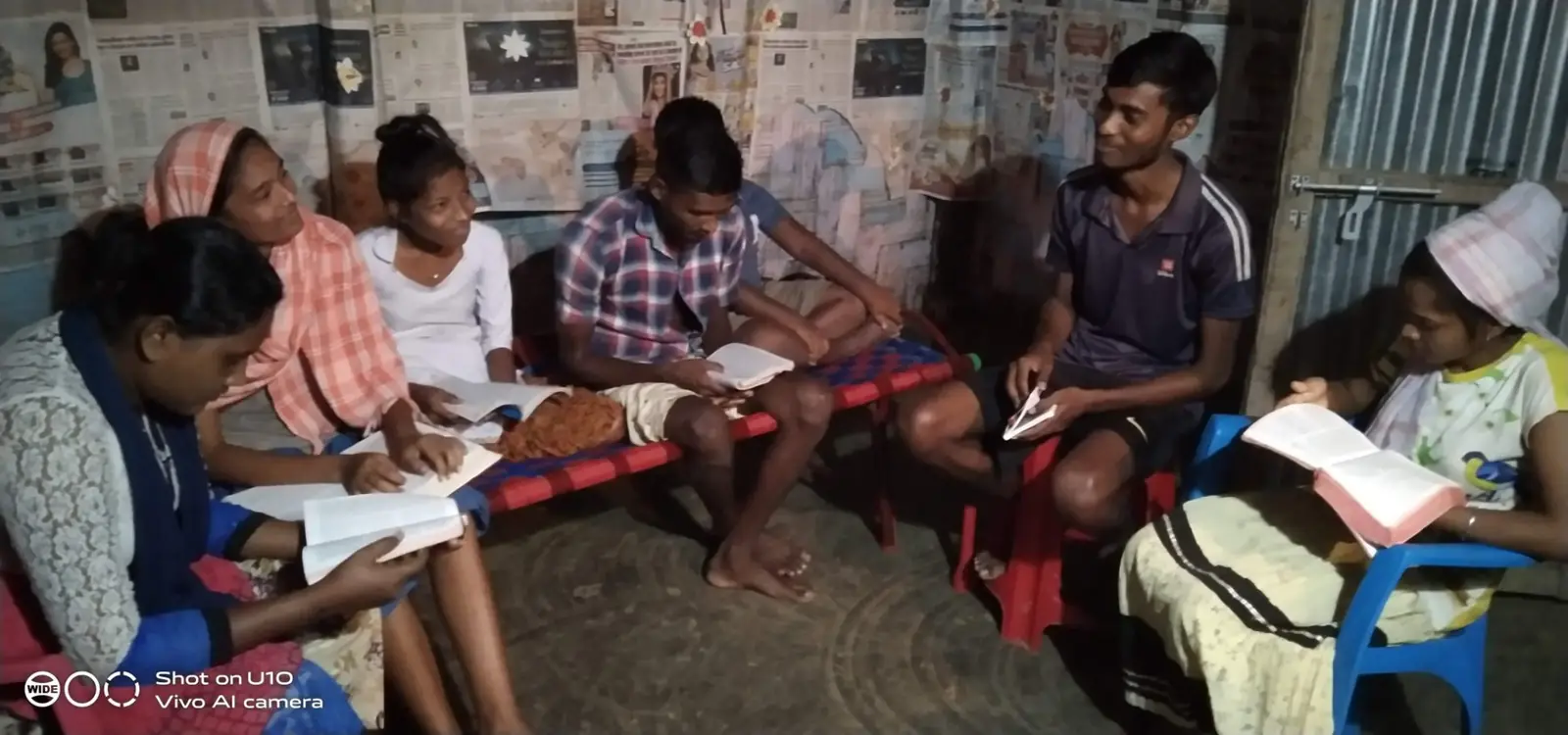
Picture six or seven people sitting close together in a small room. A few hold printed Bibles, and one reads from a phone. Someone reads a short passage out loud. Then another person tells the story back in their own words while the others fill in what got missed. Nobody preaches. The person leading mostly asks questions, and the group answers from the passage in front of them. Before they leave, each person says one thing they will do this week because of what they read.
That is a Discovery Bible Study, often shortened to DBS. It is one of the simplest tools in disciple-making, and it is one of the ways we keep Scripture at the center of the groups we work with in India. Here is what a discovery Bible study is, how a meeting usually runs, and why the method leans so hard on obedience.
What a Discovery Bible Study is
A Discovery Bible Study is a small-group study built around discovery instead of lecture. The group reads a passage of Scripture together, talks about what it says, and decides together how to respond. The leader keeps the conversation in the text and asks questions. The leader is not the expert with all the answers.
The name describes the goal: people discover what God says by reading his Word for themselves. When Paul brought the gospel to the synagogue in Berea, Luke says the Jews there “received the message with great eagerness and examined the Scriptures every day to see if these teachings were true” (Acts 17:11). They didn’t simply take Paul’s word for it. They went to the text, and “many of them believed” (Acts 17:12).
That makes a DBS different from a class. In a class, the teacher knows the material and the students try to absorb it. In a discovery group, everyone sits under the same passage, and the passage gets the last word. A new believer, a lifelong churchgoer, and someone who has never opened a Bible can all take part in the same conversation.
How a study usually runs
Groups differ in the details, but most discovery Bible studies follow a similar path.
- Look back. The group starts by sharing what they are thankful for and what is weighing on them, and they pray for one another. Then each person reports on the commitment they made last time. Did they do it? Did they tell anyone what they learned?
- Read. Someone reads the new passage aloud. Many groups read it twice, sometimes from two translations or from an audio Bible.
- Retell. One person retells the passage in their own words, and the group helps fill in anything left out. This keeps everyone close to what the text actually says.
- Discover. The group talks about what the passage shows about God, and what it shows about people, themselves included.
- Respond. Each person decides what they will obey or put into practice this week, and who they will share the passage with.
The passages are short, often a single story from the Gospels or the Old Testament. Groups that begin with friends and neighbors who don’t yet follow Jesus often walk through the big story of the Bible, from creation to Christ, one passage at a time. That way people meet Jesus in the text itself, not only in someone’s explanation of him.
The three questions we use
In the groups we work with, the study turns on three questions:
- What does it say?
- What does it mean?
- What will I do this week?
What does it say? keeps the group honest. Before anyone interprets, the group makes sure it has heard the passage correctly. Retelling helps here, because it is hard to retell a story you only skimmed.
What does it mean? asks what the passage shows about God, his character, and his ways, and what it shows about people. When a comment wanders off into a favorite sermon or an outside opinion, a good leader gently asks, “Where do you see that in what we just read?”
What will I do this week? is where the study turns into discipleship. The answer should be specific enough to check next time: “I will ask my brother to forgive me,” not “I will be more loving.” Many groups also ask each person who they will share the passage with, often a family member, a coworker, or a neighbor.
We describe the method as simple enough for anyone and deep enough to transform a community. Those two belong together. Because it is simple, the people who attend one group can start another.
Why obedience is the point
Many Bible studies end when the discussion ends. A discovery Bible study expects something to happen afterward. James is blunt about it: “Be doers of the word, and not hearers only. Otherwise, you are deceiving yourselves” (James 1:22). Jesus said, “Blessed rather are those who hear the word of God and obey it” (Luke 11:28). When he sent his disciples out, he told them to teach new disciples “to obey all that I have commanded you” (Matthew 28:20).
That is why the next meeting starts by looking back. When people know they will be asked how last week went, the commitment becomes real. Over time, a group learns to treat Scripture as something to live by, and not only something to discuss. Discipleship changes how we live, not just what we know.
This kind of obedience is not a way to earn God’s favor. It is a response to grace. People obey because they have met a God who loves them, and the group is where they learn to follow him one step at a time, with friends who will encourage them and pray for them when they stumble.
Why it suits ordinary believers
A discovery group does not need a trained teacher at the front. It needs someone who can read the passage, or play it aloud, and ask good questions. That matters wherever trained leaders are few and the people who want to learn are many.
It also suits people who learn by listening and talking. Not everyone reads easily, and in many communities stories are passed along out loud. A passage can be heard, retold, and discussed by someone who has never read a book from cover to cover.
And it reproduces. Someone who has sat through a few studies has watched the whole process from start to finish, so they can open their own home to family or neighbors the following week. This is one reason discovery groups are common in disciple-making movements: each group carries the pattern for the next one inside it.
How we use it in India
Discovery Bible Study belongs to what we call Scripture as Anchor, one of the six principles our church-planting work is built on. Groups gather around God’s Word, not around tradition or a strong personality, and they meet for Bible study and discipleship in homes and local communities. You can read about all six principles on our church-planting page.
The method also fits the way we help believers think about the people closest to them. Our Oikos framework helps disciples identify their closest circle and pray for those people, because a believer’s God-given mission field starts at home. (Oikos is the Greek word for household.) A discovery group can be the next step: a believer invites those same people to read the Bible with them. A Discovery Bible Study Starter guide for our free resource library is coming soon.
Trying it yourself
You don’t need to be in India to try this. A small group, a family, or two friends can start next week. Choose a short story from one of the Gospels, such as Jesus healing the paralyzed man in Mark 2:1–12. Read it aloud twice, ask someone to retell it, and work through the three questions. Write down what each person says they will do, and start the next meeting by asking how it went. Keep the conversation in the passage, and let the text do the teaching.
Would you pray for the groups meeting around God’s Word in homes across India? Pray that they would hear God clearly, obey what they learn, and share it with the people closest to them. And if you would like to help equip the believers who lead these groups, please consider partnering with us.